
In the Shadows of Illness Storyteller: Joy Peskin
By Joy Peskin
Part 1: Mental Illness
My father died suddenly of a heart attack on Labor Day, 2019. His funeral was later in the week, and that night, my cousins hosted a shiva. I had kept it together through picking out the casket, saying a final farewell to his body, and giving the eulogy. Now I leaned into the arms of a cousin and started sobbing.
“What if I can’t do it?” I said, or maybe I only thought that.
By “it,” I meant taking care of my mother, who had mild cognitive impairment and bipolar disorder. Her mental health was unpredictable for much of my life, but it had been particularly precarious since a suicide attempt in 2012. In-patient hospitalizations at McLean, numerous medications, ketamine therapy, and over fifty rounds of ECT hadn’t brought her onto solid emotional ground for more than a few months at a time.
Following my dad’s death, I learned that my mother couldn’t do even the most basic things anymore—all of which she had done easily in the past--like open the front door to the house with a key or pay with a credit card. Once a teacher with a master’s degree and an active social life, she still volunteered at a local school but did no driving, shopping, cooking, or cleaning. She didn’t know how much money my parents had, or in what bank it might be.
I was an only child. My dad and I had a wary partnership when it came to taking care of my mom. We each felt the other was doing it wrong.
My approach was to build her confidence, so she would do more for herself. But my dad needed to be the one doing it all, for both of them. A boy who grew up with a sick mother--sent to live with relatives, where he was abused--he believed his value came exclusively from providing service to other people. I think my father was scared that if my mom didn’t need him, she’d leave him. So he kept himself essential by keeping her needy.
The last time I saw them together, we had gone to a restaurant for dinner. My dad dragged my shuffling mom along the sidewalk. He criticized her choice from the menu. He shot her enraged looks when she had struggled to open a straw or get ketchup from the bottle. I hated the way he diminished her.
Back at their house after that meal, I had taken her aside.
“If you want to leave him,” I said quietly, “I’ll help you.”
“Oh, no!” she had replied, shocked. “Daddy takes care of me.”
When I was little, she had told me how unhappy she was with my father. Being her confidant made me feel important. Now she was in an alternate reality of their co-creation, a damsel in distress to his knight in shining armor. I refused to play along.
If I never see them together again, I thought when I left that night, it will be too soon.
Of course, I never did. One month later, my father was dead.
I had judged him for what I saw as his mishandling of my mother’s mental health for my whole life. I could do it better, I had often thought. Well, I imagined my father saying the night of the shiva, Here’s your chance. Have at it.
I took a leave of absence from my work in publishing in New York City. My young son stayed with my husband, and I moved back into my childhood bedroom in Massachusetts. It remained a museum of my teenage years, with Sweet 16 invitations, senior class photos, and the schedule of JV softball games all still tacked on the door just as I had left them in 1992.
I figured out my mom’s finances, set up a joint account so I could help with bill paying, and met with a lawyer to get power-of-attorney and healthcare proxy status. I managed the meds, drove my mother to her many appointments, and helped process her grief. Mine would wait.
On this point, my parents and I had always been in full agreement: There was only room in our family for one person’s feelings, and that person was my mother.
To the surprise of everyone—including me--she did not fall apart after my father died. On the contrary, she pulled herself together, re-learning lots of the basic skills she had lost over the years. After just one week, she returned to volunteering. After five weeks, I went home, leaving my mom in the care of a live-in helper. I tucked a note under her pillow before I left, saying our time together had been magical. I meant it.
Five months later, the pandemic hit. The school where my mother volunteered went remote. The home-health agency couldn’t promise their aides would show up. So I brought my mom to New Jersey to stay with my husband, my son, and me.
Without her usual routine, she quickly sank into a depression. Her friends reached out, but she refused to take their calls. She only wanted my undivided attention, but I couldn’t give it to her.
When I was little, I took pride in tending to my mother when she was depressed, playing the role of mini-therapist and mindfulness guru. I left index cards around the house with inspirational sayings like, “The journey of a thousand miles begins with a simple step,” and I created relaxation exercises to help her sleep. I tried to make her laugh by telling funny stories. It sometimes worked.
Nothing was working to make her feel better during the pandemic, though. About six weeks in, she told me she was having “bad thoughts,” the code term for suicidal ideation she had used since my childhood. The next morning, I found her in the basement, with a knife. She was admitted to McLean and stayed for two months of in-patient treatment.
Once her depression receded, my mom returned to her own home. She did grocery shopping and made simple meals. A few days a week after school, she went to stores like TJ Maxx and Marshalls—mostly to “shmy,” the Yiddish word for “browse.” She took herself to McDonalds for her favorite, a little hot-fudge sundae. She spent her evenings talking on the phone with friends and family, writing letters, or cutting up old magazines to make collages—often for me--filled with pictures of flowers and hearts and hopeful words like, “Amazing adventures are just waiting to be discovered.” She curled her hair with a curling iron twice a day while her cat, Katie, sat beside her on the bed. She had a desire to find love again.
I came to visit once a month, took her on a beach vacation every summer, and talked to her on the phone for an hour every day, coaching her through her ups and downs. She often told me how much she valued me. I felt more than valued. I felt essential.
Sometimes, though, I just felt tired. On our days together, I was basically providing her with emotional support for 8-10 hours straight.
“Why do I need a therapist?” she would sometimes joke. “I have you.”
Then in the Fall of 2023, four years after my dad died, my mom went on an afternoon date with a man that lasted longer than planned. Heading home in the dark, she got lost and pulled the car off the road onto a sidewalk. A nice couple stepped in to help. I planned to have a serious talk with her about not driving at night.
But I never got the chance.
***
Part II: Dementia
Things in my own life were changing. I had decided to leave my marriage. My mother was supportive; she paid for the divorce lawyer and gave me money to lease a car. I had less time and energy for her, though. I skipped a few nightly calls.
In October, 2023, I talked to my mother on the phone and she admitted that she had stopped taking her lithium because my aunt said it caused weight gain. She told me she wasn’t really eating or sleeping; she felt weak and sad. But she promised she’d starting taking the lithium again. Crisis averted.
Or not. Two days later, feeling faint, my mom fell while at school and fractured her pelvis. Delirium followed. Through a hospitalization, rehab, and assisted living, my mother only got more panicked and less oriented. By December, she was only saying two things: “I’m scared” and “I’m sorry.”
Being on call 24-hours a day, overseeing every aspect of her care from out-of-state while also managing my divorce, was complicated enough. Then I was diagnosed with thyroid cancer. I actually enjoyed the surgery to remove the cancerous nodule because I was sedated. When I woke up in the recovery room, the nurse offered to get me my phone. “Please don’t,” I said. I knew it would be filled with a flurry of texts and voicemails about my mother.
Ultimately, I advocated for her to go back to McLean, where a two-month stay cleared her delirium, but left dementia in its wake. I first felt relief. I had been told a dementia classification would help get her into a memory care facility.
The second feeling, though, was disbelief. My mother’s mental health had always been up and down. It was hard to accept that it was all downhill from here.
I had spent time thinking, ever since my dad died, that the day might come when my mom would have to live in a facility. I imagined myself walking away as she cried, begging me not to go.
That is exactly how it happened.
I left her that first day in the arms of a lovely staff member, who was saying to her, “Come dance with me, Phyllis. I bet you love to dance.” That was true. My mother and I used to dance to Barry Manilow records when I was a child, when she was happy. Neil Diamond was the soundtrack of her depressions. When she played his music, I knew one was on the horizon. And then our dancing would stop.
What I didn’t expect was for that same tearful farewell scene to play out again and again. Now, two years in, two things are true at the same time: I’m used to it, and I’ll never be used to it.
I am lucky to have the resources to pay for best-in-class care, and I have my parents’ frugal lifestyle and my father’s smart investments to thank. $16,000 per month is the price of two things: my mother’s safety, and my freedom.
I am also lucky to have Marie Clouqueur, Program Director of Caregiver Services for the Geriatric Psychiatric department at McLean. Every decision I have made for my mom since my dad died has been with Marie’s coaching, expertise, and guidance. Every caregiver should have a Marie.
I call my mother once a week, visit once a month. It is a 10-hour drive, round-trip. Sometimes the visits go poorly, like when she threatened to kill herself because I spent too much time talking with other people, including a man who brought his dog to visit his own mother. When I gently told her I was heading out that day, she screamed, “Go run off, then, with THAT MAN and THAT DOG and live your perfect life WHILE I AM STUCK HERE!”
It hit hard, because my life did feel perfect. I finally had a peaceful home and a loving, handsome boyfriend who was both fun and kind—it wasn’t lost on me that this was just the sort of man my mom had wanted for herself.
Not all of the visits are bad. One day, my mom and I sat outside in the beautiful backyard at the memory care residence; I trimmed and polished her nails. We talked about my teenage son who was on the soccer team, we took a walk. My mother helped pick vegetables from the garden for that night’s dinner salad.
My mom’s voice often sounds sweet on our weekly phone conversations. She calls me by my Yiddish pet name, Shaney, short for Shayna Maidelah, which means “pretty girl.” Tells me how proud I have made her, how much she loves me.
In the years my mother wasn’t depressed—and there were many—she nurtured my passion for reading and writing, put ribbons in my hair that matched each outfit, helped me study for every vocabulary quiz.
Sometimes when we talk, my mother tells me she is praying for God to take her. I’ll be honest: I ask for that, too. It was my birthday wish when I blew out the candles this year, for her to have an easy passage.
I wish her life could have turned out differently. I wish I could have done more to help her. I wish she could have done more to help herself.
I sometimes say caring for my mother isn’t hard because it’s new, it’s hard because it’s old. I took my job of keeping her alive very seriously. I am now ready, when she is ready, to let her go.
About the Author
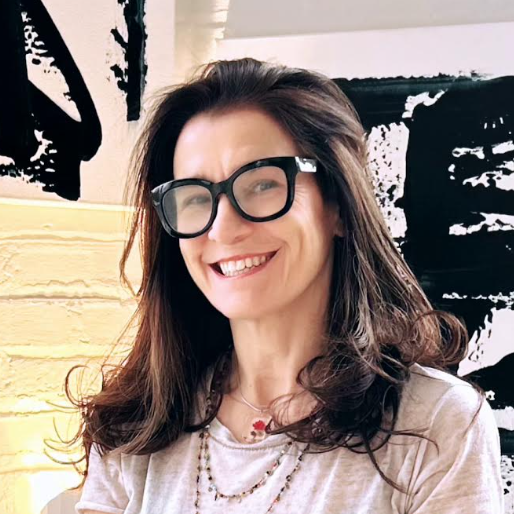
Joy Peskin is a writer, the senior executive editor at Farrar Straus Giroux Books for Young Readers, and a CASA (court appointed special advocate) in the foster care system. A caregiver for her mother who has dementia and mental illness, Joy provides coaching for fellow caregivers through her small business Joy Peskin Professional Coaching where she is an Associate Certified Coach, credentialed by the International Coaching Federation. Anyone interested in working with Joy as a coach can contact her via her website, joypeskin.com