
Twenty-Three Years Without an Answer
By Heather Blair
Imagine going twenty-three years of your life without knowing you have a genetic connective tissue disorder.
Growing up, I experienced many symptoms that were dismissed as minor or explained away as growing pains. I was a two-sport athlete, with my main passion being soccer for over 14 years on the same team. I was always tall. My mom loves to tell the story of how I could no longer fit in a baby carrier at just three-months old because my legs were too long. I struggled with significant joint pain throughout childhood. I could do all the “cool party tricks,” like touching my thumbs to my wrists. What I believed was normal, I would later learn, was not.
During my freshman year basketball season, my life changed overnight.
Throughout the season, my condition slowly worsened until I developed severe left leg pain -known as sciatica - from two herniated discs and spinal stenosis that caused foot drop (the inability to pick up my foot on its own). I became home-schooled midway through my school year. On August 16, 2016, I underwent a double laminectomy (removing part of the lamina bone to reach the injured disc) and a double discectomy (removing unwanted disc remnant in the spinal canal, compressing nerves) at two different levels in my lumbar spine. It was supposed to be a one-night stay, but that turned into five nights because they couldn't get my pain under control. That September, I returned to a new school and gradually improved over the next seven years, though I continued to live with what was considered “normal” back pain. Still, no one could explain why I had woken up one day needing major spine surgery at 15-years-old, without an accident or injury.
Fast-forward to 2022, I began experiencing extreme fatigue and worsening joint pain. A local rheumatologist told me I was vitamin D deficient and left it at that. Two months later, I woke up with my left arm and half of my left hand numb and tingling. I assumed I just needed to shake it off, but that wasn’t the case. I had just started my first job as a Certified Clinical Medical Assistant in Pediatrics, and suddenly I needed ulnar nerve elbow surgery at 21-years-old.
Once again, I woke up needing surgery with no clear explanation.
I felt frustrated and deeply unsettled. There had to be a reason behind all of this, yet my concerns were repeatedly dismissed by my pediatricians and the rheumatologist.
In early 2023, while at work, I felt a sharp surge of nerve pain shooting down my previously injured leg. I tried to stay in denial, but the pain quickly became unbearable and the foot drop returned. I had re-herniated the same two discs at levels L4-L5 and L5-S1. I needed a spinal fusion; my spine was practically bone-on-bone. During my surgery, my surgeon had to spend an additional two hours removing an abnormal amount of scar tissue. He referred me to rheumatology for possible hypermobile Ehlers Danlos Syndrome (hEDS), a connective tissue disorder that causes stretchy skin, chronic pain, overly flexible joints, fatigue, and gastrointestinal issues; it affects nearly every part of the human body. There are seven sub-types defined within Ehlers Danlos syndrome. Hypermobile EDS does not yet have a specific genetic test; diagnosis is based on a Beighton score, medical history, and physical evaluation.
During my hospital stay, several doctors suggested the same referral. I had many key indicators: difficulty holding IVs, translucent and doughy skin, extremely flat feet and hypermobility in most areas of my body. During my surgeries in 2023, my incisions reopened and had to be surgically glued shut while I was awake. In 2025, after my CSF leak repair surgery, my incision reopened after stitch removal performed by plastic surgery, again, while I was awake.
When I finally saw a new rheumatologist, he diagnosed me with hEDS almost immediately. He told me I was a classic hEDS patient based on my appearance alone. In that moment, relief and grief arrived together. Relief that there was finally a name for the pain, the surgeries, the years of unanswered questions. But grief for the time I lost, the years spent doubting my body, questioning myself, and wondering if the pain was somehow my fault. A diagnosis does not ease what came before it, but it gives shape to chaos. For the first time, my story began to make sense.
In 2024, I underwent yet another surgery on my right elbow, my dominant arm, which was the third surgery of my life for the same issue. At least this time, I finally understood why. HEDS changed my life overnight when I was 15-years-old. If only that little girl had known the journey ahead. There is no cure for hEDS, only management. Medication has helped me manage chronic pain and improve my hyperPOTS, though I am still working to find the right balance.
Grief is often described in five stages: denial, bargaining, anger, depression, and acceptance. Most people associate grief with the loss of a loved one. But for those living with chronic illness, grief takes on a different shape. We grieve the person we used to be.
The truth I wish I had encountered earlier is this: terminal illness is a death sentence; chronic illness is a life sentence. Chronic illness is not a temporary struggle. It is a lifetime of starting over, learning to live in a body that sometimes feels like a stranger, one that has betrayed you.
Today, my medical history includes eight hospital stays; two inpatient rehabilitation stays; four spine surgeries; more than ten epidurals; three blood patches; two myelograms; two elbow surgeries; the deterioration of my autonomic nervous system; a migraine disorder; and one life-changing surgery from which I am only a year post-op.
My passion and love for sports were taken from me. I can no longer use the certifications I worked so hard to earn. Every day, I am still figuring out who I am, with a body that says “no” and a mind that still says “yes.” Some days, I feel painfully behind for my age.
My heart aches for the 15-year-old girl who had no idea of what lay ahead, yet it also feels immense pride for the strength and resilience it has taken to get this far. I had the choice to let hEDS swallow me or grow me. I know this is part of my life’s journey, but I refuse to let it define who I am.
There were times I cried until there were no tears left and long stretches where sadness consumed me. Even in moments of happiness, it felt difficult to allow myself joy. Hope felt impossible when my inner world was caught in a relentless loop, a rollercoaster with no end in sight.
Through it all, I have learned that mental health is not optional; it is essential. Living with chronic illness has taught me some of life’s hardest lessons: healing isn’t linear; the little things are actually the big things; self-love is not selfish; asking for help is not weakness; your body is the captor of your soul, so take care of it; scars are stories of strength; and kindness to others and to ourselves is one of the most powerful gifts we can offer. There are still many lessons ahead, but I am learning to accept myself for who I am and for the person I am still becoming. I am learning to wear my scars proudly as reminders of everything I have survived.
My journey has reshaped my understanding of life’s purpose. In the end, I believe it comes down to one thing: love.
As my father always said, “Don’t make a permanent decision on a temporary timeline.” Through the darkest days, I have realized that my best and happiest days may still be ahead of me. I am still searching for my light and my purpose, but I know the best version of myself shines when I am surrounded by people who love me unapologetically and authentically.
For so long, I felt ashamed, embarrassed, and compelled to shrink because of my illness. Now, I feel a fire within me to raise awareness for these complex conditions—because if sharing my story helps even one person feel seen, understood, or diagnosed sooner, then it is worth it.
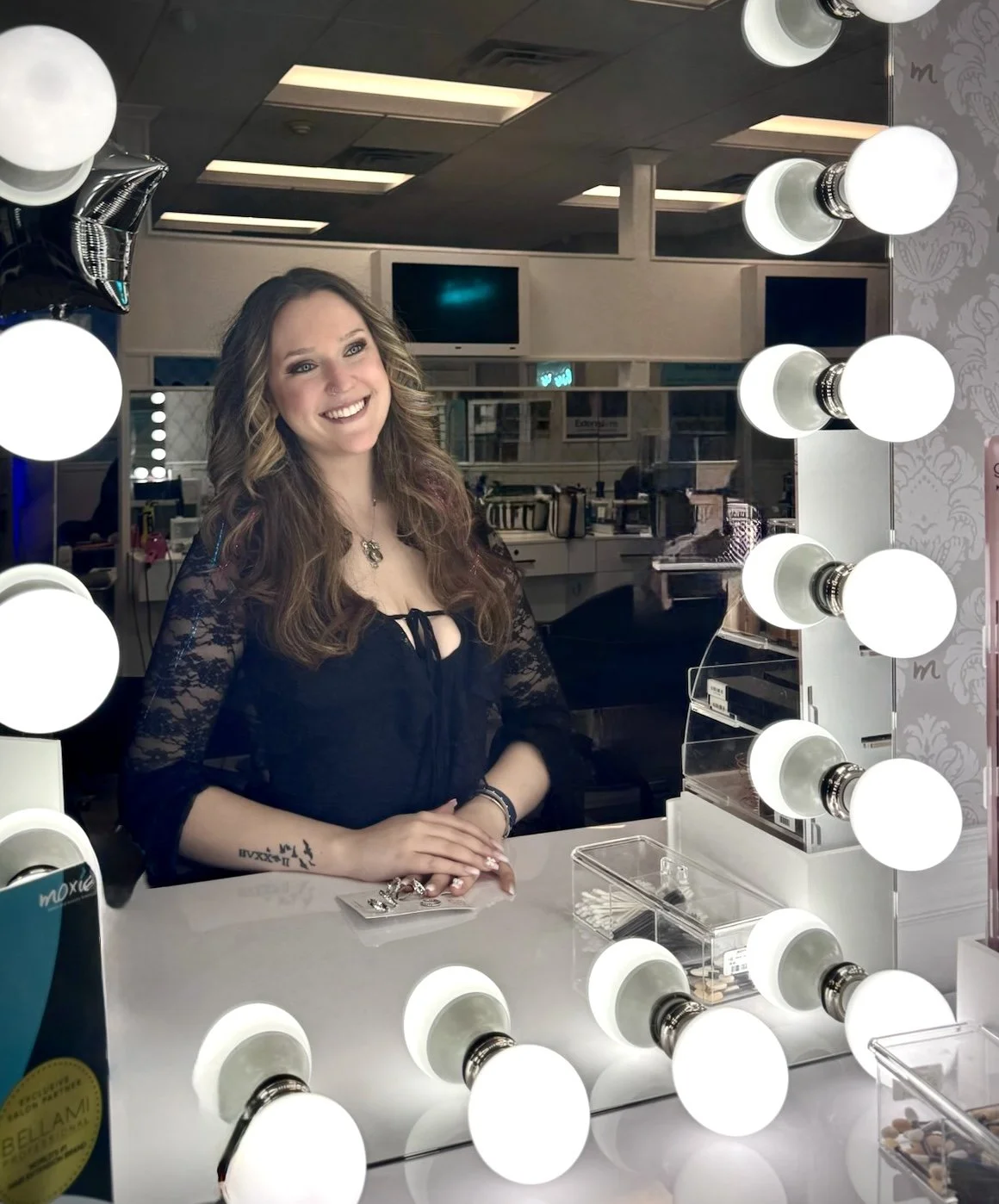
About the Author
Heather Blair just turned 25 at the end of February 2026. She lives with hEDS, HyperPOTS, Lumbar Spinal Fusion, and she is a two-time spinal CSF leak survivor. Heather recently received the visionary Global Recognition Award for her leadership and work in health and patient advocacy spaces. Heather aspires to spread awareness internationally for these complex medical conditions and the medical negligence patients face along the journey. Not only does she spread awareness for the medical portion, but the mental health side of it, too, which no one seems to talk about. She advocates for the people who are suffering, who need help, for someone to relate to. She never wants anyone to have to go through the pain and trauma she experienced. If you would like to read more about her medical journey or follow along with her advocacy work, you can check out her website.