
Trust is a Clinical Intervention
By Sarah Whaley
When the medical assistant called my name, I followed her down the hallway. After the routine vitals, she led me into a brightly lit exam room that suddenly felt smaller than it should have. I was handed a cloth gown, told to undress from the waist up and leave it open in the front, and then left alone with just my thoughts. I braced myself for what I assumed would be a familiar role: advocate, negotiator, maybe even adversary. I was ready to fight for what I believed was right for my body.
The door opened exactly on time. The surgeon introduced herself, her voice warm and unhurried. She sat down across from me and pulled out my pathology report, holding the pages between us as if they belonged to both of us. There was nothing rushed in her movements. “Breast cancer treatment usually has several possible components,” she explained. “Surgery is one. Sometimes radiation. Sometimes chemotherapy. Often anti-hormonal therapy. Whether each applies depends on the specifics of the tumor.” She laid out the terrain but did not lead me toward a conclusion. For the next ninety minutes, the surgeon walked through my diagnosis, prognosis and every viable course of treatment. She then went into extensive detail about my surgical options and did so without any bias. I’m certain she had a clinical preference based on the specifics of my diagnosis, but I wouldn't have been able to identify that preference based on how she presented the information. Each option was offered with the same tone, the same weight, the same respect for uncertainty.
When the surgeon finished, I took a breath. “Can I walk you through how I’m thinking about this? And then tell you where I’m leaning.” I wanted her to tell me two things: one, if my leaning was appropriate and medically indicated given the specifics of what I was facing and two, if a family member had my exact profile would she support this preference. She listened intently as I verbalized my thought process, something I had considered at length. I explained that I had been called back repeatedly over time for abnormal findings, each instance launching the same exhausting sequence of urgent notifications, negotiations for timely follow up, weeks of waiting for additional imaging, then more waiting for biopsies, all while living in the psychological limbo of not knowing whether I had cancer or not. It was not just stressful, I told her; it had become a recurring condition of my life. I went on to explain that my concern with choosing a lumpectomy was not simply surgical, but structural. The pattern of surveillance would continue. The frequency of callbacks would likely persist. The emotional and cognitive burden of perpetual monitoring would remain intact. With a double mastectomy, I understood that recurrence risk would not disappear, but the nature of surveillance would fundamentally change.
As I spoke, the surgeon didn’t interrupt. When I finished, she told me that my rationale was sound and medically indicated and that she would support the double mastectomy that I was leaning toward if it were a member of her family. From there, she moved with the same precision into reconstruction options, closure options, and what it would mean if I chose to stay flat. By the end of the appointment, I had every single piece of information that I would need to make a truly informed decision. This initial meeting set the tone for every interaction that would follow. It communicated confidence and competence and also built trust. I knew I had a doctor that didn’t just listen to me but truly considered me.
Being treated as a capable, thinking participant in my own care fundamentally changed how I showed up as a patient. I wasn’t second-guessing every decision in the quiet hours after appointments. I wasn’t spiraling through worst-case scenarios or crowdsourcing reassurance from the internet. I felt grounded in the decisions I was making because they were made with me, not for me. That confidence mattered. It allowed me to be decisive rather than deferential, engaged rather than anxious. I wasn’t trying to manage my fear alone, nor was I outsourcing responsibility for my body. The collaboration itself became stabilizing.
The day of surgery, the doctor met with me twice prior to being wheeled back. She explained everything that was going to happen, the timeline, and what post-op and recovery would look like. Then, almost imperceptibly, the conversation shifted. We moved beyond logistics into something lighter and less clinical. I don’t remember the specifics of what we talked about, only the feeling of it. It was an easy back-and-forth that briefly displaced the gravity of what was about to happen. It was a bit of co-regulating for my nervous system that I didn’t know I needed. At one point, I half-jokingly asked whether she had eaten a good breakfast and whether her hands felt steady and well rested. The surgeon smiled, assured me she was more than prepared, and added that I was her first and only surgery of the day. I told her I had just two requests: keep me alive and please don’t leave me with side boobs. The exchange steadied me. In those moments, she was not just an exceptional surgeon executing a high stakes procedure; she was a person fully present with another person.
Every interaction since that initial appointment has been collaborative. There are not many circumstances I can think of where I would go against the medical advice of my doctors. While I want to have full understanding and often discussions surrounding treatment and care, I also am quick to defer to their professional judgement and expertise. I recognize what is her lane and what is mine and I don’t presume to place us on equal footing in that regard. However, I also think patient collaboration is vital in medicine and directly impacts patient outcomes. Through personal interactions, doctors instill trust with their patients.
Because cancer is multi-pronged in treatment and follow up, I had multiple follow up appointments with my surgeon to address seromas and to have drains re-inserted. Many of these appointments were at the end of what I presume was a very full day for her. Never once did I feel rushed or like an inconvenience. She gave me the same level of attentiveness as if I were her first patient of the day. Each time I reached out about concerns with fluid accumulation, she was responsive and timely. The level of attentiveness was rare in my experience and as a whole I have had some excellent doctors throughout my life. Outside of the follow ups, my doctor communicated specifics of results that slowly rolled in and also kept me informed about what they would mean for follow up treatment. I never once had to initiate that communication. This attention to detail and follow up also instills confidence and solidifies trust in a clinician.
That confidence had tangible effects. I was able to move forward with treatment decisions efficiently and without regret. I followed post-operative instructions closely because I understood not just what to do, but why it mattered. When complications arose, as they often do, I approached them calmly and promptly, knowing I would be taken seriously. There was no adversarial tone, no sense that I needed to exaggerate symptoms to be heard. Trust reduced friction. It reduced noise. In a process as physically and emotionally taxing as cancer treatment, those are not soft benefits; they are clinical ones.
My surgeon literally saved my life, but beyond that, she treated my life like something precious. Surgeons are known for their precision and singular focus on cutting out the “bad stuff." Her approach was much more holistic, considering quality of life versus side effects of care. I appreciated her direct approach and her willingness to have very frank discussions with me. I didn’t need my hand held. Some patients may and that’s fine, too. I'm sure if that is what I needed from her, she would have been capable of doing that as well. I am grateful she got an accurate read on me early and was the surgeon I needed.
Collaboration did not erase hierarchy, nor should it. My surgeon’s expertise was essential; my role was never to challenge her training or substitute my judgment for hers. But hierarchy does not have to mean distance, and authority does not require opacity. In this relationship, power was not hoarded or performed. It was exercised with clarity, restraint and confidence. That made it safe. I could trust my doctor because she did not need me to be passive in order to remain in control. She held authority without defensiveness, and in doing so, made room for me to hold agency without apology.
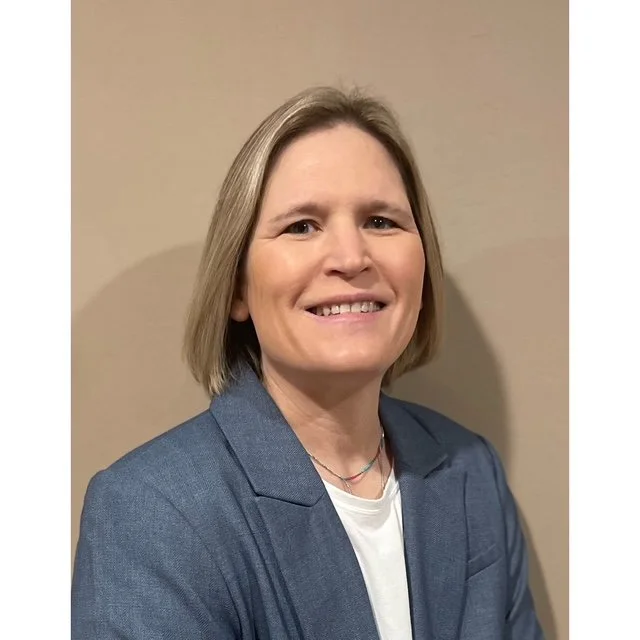
About the Author
Sarah Whaley serves as a school district administrator, where she works at the intersection of systems, leadership and human behavior. She believes institutions function best when trust is intentional and relationships are treated as foundational infrastructure. Her writing explores leadership, health, power and the relational dynamics that shape outcomes.