
When the Clinician Becomes the Patient
By Lisa Zahakos
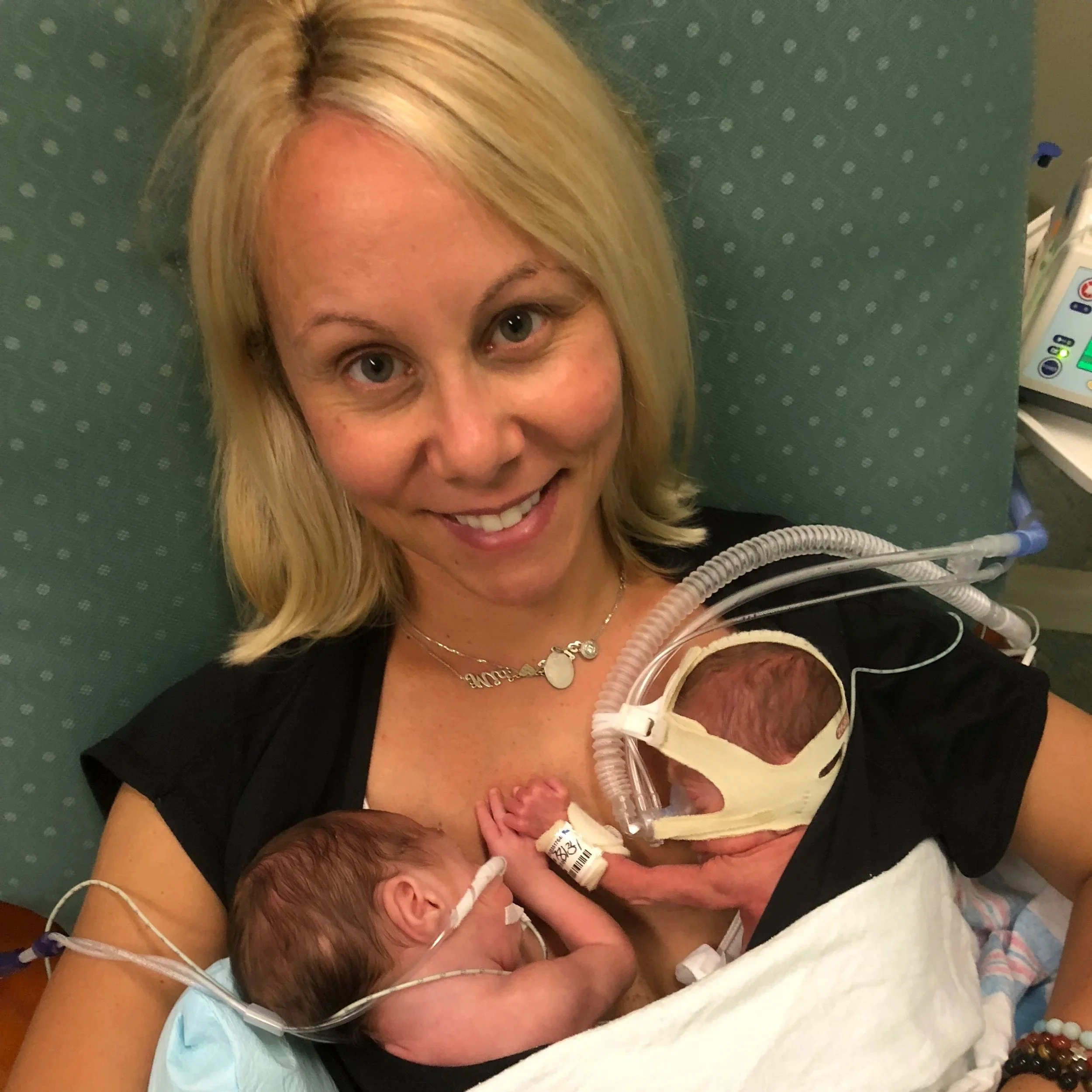
The chair beside the incubator was cold. I watched my identical twin sons and tried to understand everything attached to them. I wanted to know how the machines worked, what each wire was for, what was going into their small bodies. I was a physician assistant, and these were questions I knew how to ask. Then there was the question underneath all of them, the one I carried as their mother: would I get to bring both of them home?
Peter and Maurice were born in June 2018, at 28 weeks and five days. By then, I had already spent months afraid of losing them. They shared a placenta and developed twin-to-twin transfusion syndrome, with dangerously unequal blood flow between them. We traveled from New Jersey to Miami for fetal laser surgery. The surgeon used a laser to close selected blood vessels in the placenta and help balance the blood flow between the boys. We were trying to give them more time to grow before they had to survive outside my body.
Before our first trip, the surgeon spent hours on the phone with me. He explained the condition and the tests he could do. He couldn't promise that the boys would be healthy, but he helped me understand what we could do next. I felt he cared about me and my babies, and that gave me hope. When I told my husband, James, I needed to go to Miami, he was ready to go with me.
After fetal surgery, I became short of breath. My first years as a physician assistant had been in interventional cardiology, so I knew that trouble breathing could be serious. I was also frightened for my babies. Having medical training didn't make it easier to speak up from a hospital bed or to sort out what was happening to me. I needed my symptoms taken seriously and someone to help me understand them.
I told the nurses I was struggling to breathe, but it was attributed to panic attacks. During the night, a nurse said she was taking off my oxygen. When she did, the babies' heart rates dropped. When we woke the next morning, a team was in the room drawing blood for an arterial blood gas test to check the oxygen in my blood. They said I looked critically ill and took me straight to intensive care for oxygen support. They diagnosed acute pulmonary edema, a buildup of fluid in my lungs. I spent several days in intensive care. I was still pregnant. The boys depended on my body, and I was having trouble breathing myself.
Once I was able to come off oxygen, I returned to New Jersey, still carrying the boys. A few weeks later, at 28 weeks and five days, I had an emergency C-section. At delivery, my BNP blood test was elevated, suggesting possible heart failure. Peter and Maurice were admitted to the neonatal intensive care unit (NICU). They would spend the summer there.
James and I also had our daughters, Mia and Juliet, at home. Thankfully, our family helped take care of the girls. I went from watching the boys in their incubators to being with the girls at home, then back again. I was recovering from a C-section and had been seriously ill myself. Wherever I was, I missed someone.
I wanted to hold my boys, feed them and bring them home, as I had with their sisters. In the NICU, even holding them wasn't always possible. The staff encouraged me to read to them. I hoped they could hear my voice through all that noise and know I was close. I prayed for them to breathe on their own, then to eat without tubes. I pictured them on the beach, running with their sisters and cousins. I had to keep seeing them that way. Other NICU mothers helped me hold on to that hope. They knew what it was like to love a baby so much and still have to leave him in the hospital.
I kept asking questions of the medical team. More information gave me some sense of control, but I couldn't always take it in. When I heard that one of my sons had apnea, pauses in breathing, I lost the rest of what was being said. I knew what the word meant. Hearing it about my own baby was frightening in a way I hadn't understood before. Sometimes I needed an explanation repeated, or a little time before I could hear more.
One clinician kept calling me mommy. I asked her to use my name. I loved being the boys' mother, but I wanted her to see me as a person, too. I was sitting beside their incubators after being seriously ill myself. I needed care and reassurance even when I knew the clinical questions to ask.
That experience has stayed with me as a clinician. I'm more careful now about how much I explain at once. A patient may understand the words I'm using and still be too frightened to take in what I'm saying. I remember needing someone to slow down and go through it again.
Peter came home after 53 days. Maurice stayed for about three months. I was so happy to have Peter home, but leaving Maurice at the hospital became harder in those last weeks. We were close to having all four children home. I wanted to take him with me every time I left.
Long after that summer, the smell of hand sanitizer could bring it all back. I could almost hear the monitors again and feel that chair beneath me. The boys were getting stronger. I thanked God for that, but I was still trying to understand what had happened to me, too.
Looking back, I can see how little room there was to think about my own recovery. The boys' breathing, feeding and growth shaped our days. I had needed intensive care during pregnancy and was still recovering from the C-section. At the NICU, I was the mother asking about her babies. It was easy to put off thinking about what had happened to me.
I wish I had been better able to say what I needed. I could ask about every part of the boys' care, but I struggled to think about my own. I needed help working out how to recover while going back and forth to the NICU and caring for the girls.
I've been a physician assistant for 23 years. I now work in psychiatry and addiction medicine, after earlier years in cardiology and preventive care. Becoming a patient changed the questions I ask.
When a woman tells me about a difficult pregnancy or a baby who needed hospital care, I ask about her: how she felt physically, whether she needed treatment herself, and what happened with that care after she went home. A baby's recovery does not tell me how the mother recovered.
I ask about her sleep and mood, how she's coping and who is there to help. If she's using alcohol or other substances to get through the day, she needs to be able to tell me without feeling ashamed. In mental health and addiction care, I need to understand her physical recovery, too.
I remember how much help I needed with the girls and the trips to the hospital. When a patient has trouble getting to a follow-up visit, I ask what's making it difficult. There may be children to care for, a ride to arrange or someone else's appointments taking up the day.
Today, Peter and Maurice are eight and play competitive soccer. I watch them run and remember praying for them just to breathe on their own. This was the life I kept picturing for them. Now my boys are out there, strong enough to run and play. I thank God for them and for the people who helped us bring them home.
When a woman tells me her children are doing well, I'm glad to hear it. I also want to hear how she has been since they came home. I remember how much of my own story I could leave out while talking about the boys.
About the Author
Lisa Zahakos, PA-C, is a certified physician assistant based in New Jersey and a mother of four. She is the founder of HEART RESERVE, a women's health education platform, and writes about her family's experience with twin-to-twin transfusion syndrome and neonatal intensive care.