
Trust Under Pressure
By Sarah Whaley
The call came while I was at work.
My surgeon did not ease into it. She led with, “Where are you right now?” She told me to go home, pack a bag, and go to the hospital and prepare to be there for a few days. The infection I had reported earlier had changed course. Oral antibiotics were no longer sufficient; it was spreading.
There was no ambiguity in her voice. No hesitation or framing it as a possibility. She gave me instructions: what to say on arrival, that a resident would meet me, and how to have her paged from the emergency department. She would come down when she was finished in surgery.
I remember hanging up and standing there for a moment before moving. Not because I was debating the decision, but because I was absorbing the speed of it. Then I left work, went home, packed a bag, and went to the hospital. I did not question it. I was admitted for three days.
What stays with me now is not the hospitalization itself, but what did not happen in the space before it: no internal negotiation, no attempt to slow the decision down, no reaching outward for confirmation that this was necessary.
That absence was not accidental. It reflected something that had already been built.
In my first appointment with my surgeon months prior, I was given a diagnosis that required decisions I did not feel prepared to make. She did not rush the conversation. She did not guide me toward a preferred option through tone or urgency. She laid out each path with the same steadiness, the same attention to detail, and the same restraint. She explained what was known, what was uncertain, and what each choice would mean in practical terms.
By the time I left that appointment, I did not feel certainty about the disease: breast cancer. I felt certainty about her. That distinction mattered more than I understood at the time. I did not have reassurance, but I did have a working understanding of how this surgeon made decisions when she did not have perfect information.
That trust did not remain abstract for long. It was tested first by the infection.
Weeks after the hospitalization for the post-surgical infection, I began to notice a small bump near the surgical site. An ultrasound was ordered. The results led to a biopsy. When I left the biopsy appointment, I was uncertain that the correct area had been sampled. I was uncertain enough that I reached out to both the radiologist and my surgeon. The radiologist explained his process, answered my questions, and assured me he had sampled the target. But the feeling of uncertainty remained. It was not dramatic. It was the kind that sits in the background and does not resolve itself when you move on to other tasks. I reached out to my surgeon again.
She did not dismiss the concern or redirect it. She walked me through how concordance is established between imaging findings and pathology results. She explained what radiologists look for when determining whether a biopsy has captured the correct target. She asked me to wait for pathology to come back and let the process play out.
Then she said something simple: she trusted the radiologist.
Not as reassurance, but as professional judgment—someone she had worked with, someone whose work she understood, someone she respected. But she did not end there; she reviewed the imaging herself. She spoke directly with the radiologist. After final pathology results returned, she spoke with him again to confirm alignment between what had been seen and what had been sampled.
Only then did she return to me with certainty. And I accepted that certainty. Not because the question disappeared, but because I could see the process that contained it.
In the hospital, trust looked like speed. A decision made without delay, followed without resistance, because escalation had already been clearly defined by someone I had learned not to second-guess.
In outpatient care, it looked like something different. It looked like staying inside uncertainty without escalating it prematurely, because I trusted that the uncertainty was being handled with the same seriousness behind the scenes.
In both cases, I did not have to translate clinical judgment into my own separate investigation in order to move forward. Trust became a form of infrastructure - something quietly built over time that allowed me to keep moving when the path ahead was unclear.
About the Author
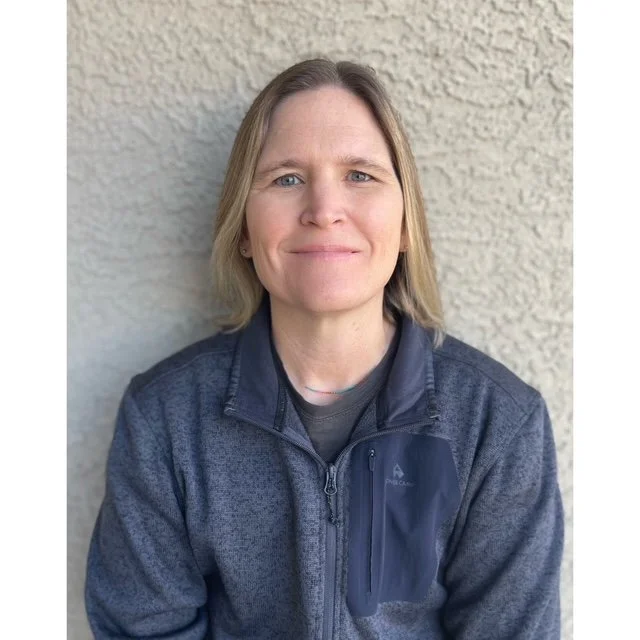
Sarah Whaley is a school district administrator who examines systems through the lens of human behavior. Her writing explores health, leadership, trust, and agency, with a particular interest in the tension between institutional structures and individual experience. She is drawn to the ways relationships, power, and accountability shape outcomes, often more profoundly than policy, process, or expertise alone.